On March 26, 2025, the Purcellville Town Council held its first review of the draft budget presented by Interim Town Manager Kwasi Fraser.
In accordance with best practices, it is the Town Manager’s duty to propose a balanced budget that aligns with the Council’s strategic plan. This budget must not only adequately fund essential services but also account for future capital improvement projects (CIP).
Fraser’s proposed budget is currently unbalanced, necessitating a transfer of $1.6 million from the meals tax in the General Fund to the water and wastewater fund to mitigate required rate increases. Financial consultants have strongly advised against “mixing funds,” as it could negatively affect the Town’s credit rating. Additionally, the majority of the Council voted to equalize the tax rate, which further reduced revenue to the General Fund by an additional $300,000.
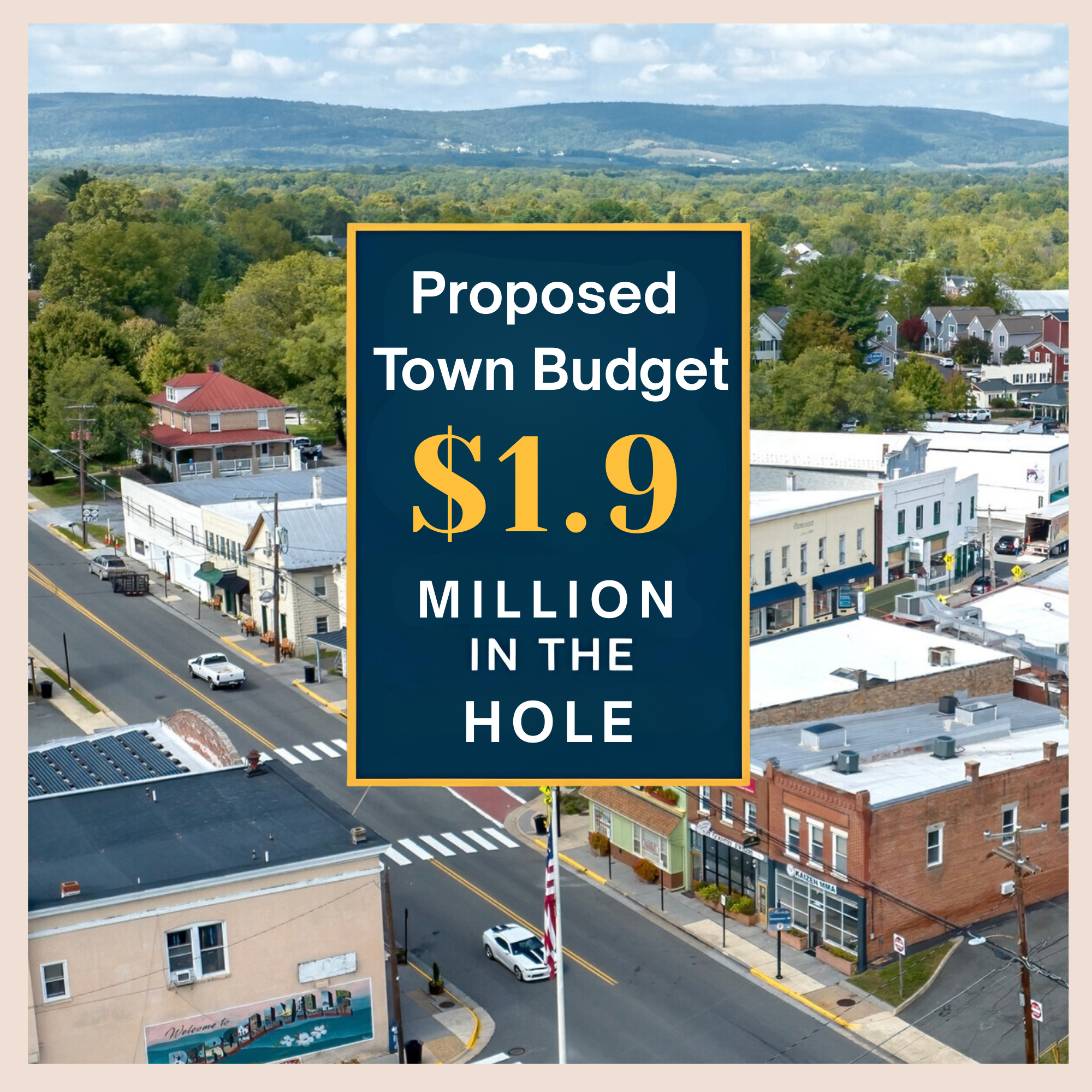
Typically, a Town Manager would suggest rate or tax adjustments or service reductions to achieve a balanced budget. As it stands, Purcellville’s budget shows a deficit of $1.9 million.
During the meeting, Finance Director Ms. Krens outlined the budget preparation process, which began in July 2024 and will conclude this spring with the Town Council’s adoption of the new budget. Town staff prepare a recommended operational and CIP budget for the Town Manager’s review, which is then presented to the Council for assessment against their strategic plan.
The discussion also addressed general fund revenues and expenditures, focusing initially on personnel costs. Human Resources Director LaDonna Snellbaker expressed serious concerns about retaining skilled employees amid competition from surrounding jurisdictions. Currently, the town has 94 employee positions, with five (four in the police department and one in the water department) unfunded in this budget. Snellbaker emphasized the urgent need to prepare for upcoming retirements, as 45% of the workforce is over 50 years old.
She also highlighted a significant pay disparity between Purcellville and neighboring areas. The proposed budget includes a 1.5% performance review increase, while nearby jurisdictions are offering pay adjustments of up to 4.8%. This puts Purcellville approximately 13% behind in salaries for key positions, equating to around $11,000 less per year than comparable roles in neighboring towns.
Additionally, Council Member Khalil raised questions about staffing levels in the Finance Department since Loudoun County took over the billing and collection of Purcellville’s taxes three years ago. While some workload has eased, Krens noted that new regulations and ongoing responsibilities have maintained a substantial workload for the department.
Council Member Rayner questioned the absence of reductions in chargebacks within the budget. Fraser admitted he did not implement any reductions in his draft budget, despite earlier commitments.
With a $1.9 million budget deficit, Council Member Wright challenged Fraser to explain the lack of cost-saving measures that wouldn’t affect service levels. Fraser acknowledged that no such reductions were included in the proposed budget.
Despite a $2 million increase in the proposed budget compared to FY 25, some Council members expressed skepticism about the realism of certain expenses. Notably, the FY 26 budget reflects a $71,000 reduction in attorney expenses without justification, raising concerns about the potential need for legal services due to current personnel issues.
Council Member Stought warned that if the Town Council continues to transfer the same amount of meals tax to the utility fund, Purcellville could reach its minimum policy limit in the General Fund within three years. He questioned what utility rates might look like at that point.
Over the last decade, financial consultants and Town staff have recommended minimal rate increases to avoid the double-digit hikes experienced last year. Stought cautioned that delaying necessary actions could set residents up for significant utility rate increases when transfers from the meals tax are no longer feasible.
Council Member Khalil emphasized the importance of making long-term cuts this year to avoid dependence on meals tax transfers in the future. Khalil urged the need to scrutinize all budget areas and adopt a more austere approach.
As discussions progress, the Purcellville Town Council faces the challenging task of balancing fiscal responsibility with the ongoing needs of the community.